Rector’s message
Rector’s message
Located on the shores of Lake Dang, in the Adamawa Region, the University of Ngaoundéré is the first state university in northern Cameroon. It trains young people from the northern regions, as well as many students from the southern regions and from neighbouring countries.
Born of the Ngaoundéré University Centre, it was established as a university by Presidential Decree No. 92/074 of 13 April 1992 and took its present organisation with the 1993 university reform, which aimed in particular to relieve the pressure on the University of Yaoundé.
A broad range of programmes
The University has ten institutions: five faculties — the Faculty of Arts, Letters and Social Sciences (FALSH), the Faculty of Law and Political Science (FSJP), the Faculty of Economics and Management (FSEG), the Faculty of Science (FS) and the Faculty of Education (FSE) — and five schools: the National School of Agro-Industrial Sciences (ENSAI), the University Institute of Technology (IUT), the School of Veterinary Medicine and Sciences (ESMV), the School of Geology and Mining Engineering (EGEM) and the School of Chemical Engineering and Mineral Industries (EGCIM), the most recent.
Their programmes follow the Bachelor-Master-Doctorate (LMD) system, the foundation of career-oriented training, and most are backed by doctoral schools. The main campus in Dang welcomes some 25,000 students; an annex campus operates in Meiganga.
A committed teaching staff
Thanks to its location and the drive of its management team, the University has established itself as a centre of academic excellence. It owes this to a dedicated and skilled teaching staff, now numbering 520 permanent lecturers. Alongside them, support staff contribute every day to teaching and research.
Digital technology for learning
The ICT Development Centre (CDTIC) is tasked with extending the use of information and communication technologies and helping the university community make them its own. Its services include:
- a community radio station broadcasting on 99.0 FM;
- a meeting room;
- training courses and certifications;
- web and mobile application development.
The CDTIC also hosts the Orange Digital Center Club (ODC Club), opened in November 2024 through the cooperation between the University and Orange Cameroon. With equipped workstations and workshops led by digital coaches, it enables students to acquire digital skills alongside their studies. The University is also home to a Francophone Digital Campus (CNF), the result of its cooperation with the Agence universitaire de la Francophonie (AUF).
The University Digital Development Centre (CDNU) stems from the e-National Higher Education Network project, launched by the Head of State for the digital transformation of state universities. Its missions are to extend online learning and to digitise and design courses for delivery. It is equipped with:
- a distance-learning room;
- a videoconference room;
- a data centre connecting the University to the network of state universities and to the national supervision centre run by the Ministry of Higher Education;
- a modern studio for recording courses.
Student entrepreneurship
The University encourages its students to become entrepreneurs. It applies the national student-entrepreneur status defined by the Ministry of Higher Education in 2023: a student with a business creation project may benefit from an adjusted timetable, mentoring by academic and professional supervisors, help in seeking funding, and recognition of the project as a final-year project.
The University’s business incubator, based at ENSAI, supports these projects from idea to market. Its results have been recognised: at the 2025 edition of the Cameroonian Student Engineering and Talent Fair (GETEC), six projects from the incubator were selected for funding, in agro-industry and local processing — sweet potato flour, kilichi, parboiled paddy rice, vegetable oil, therapeutic biscuits and the design of agro-industrial equipment.
A campus life that supports success
Students enjoy a suitable working environment, and financial support is granted to those most in need. A four-building hall of residence offers nearly 500 rooms, complemented by a block of 36 rooms reserved for doctoral students. A fully re-equipped university restaurant and a medical and social centre, a reference facility in the region, complete these services.
Social, cultural and sporting life is driven by many clubs and associations. The Dang campus has sports facilities built to international standards: a gymnasium, two handball and volleyball complexes, two basketball courts, two tennis courts and two football pitches.
To keep pace with growing student numbers, new infrastructure has strengthened existing facilities, including the IUT administrative block, the FSEG 1,000-seat lecture hall, the FALSH 500-seat lecture hall and the Faculty of Science laboratories.
Looking ahead
Building on these strengths, the University of Ngaoundéré is pursuing its projects: launching a best researcher award, fully securing the campus, acquiring buses to transport staff and students, renewing sports equipment and fully including students with disabilities. All these commitments serve a living and learning environment that matches its ambitions.
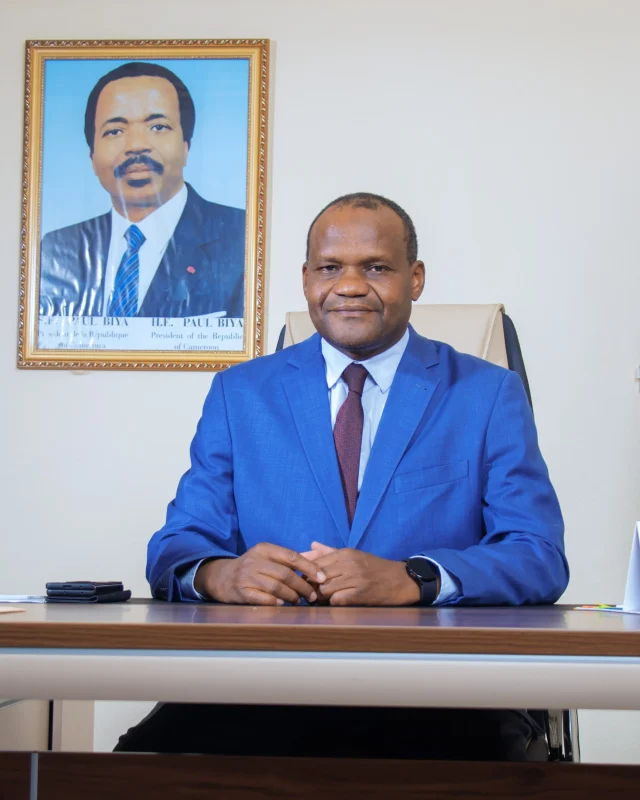
Prof. MAMOUDOU ABDOULMOUMINI Rector of The University of Ngaoundéré