Research
Doctoral schools
Four doctoral schools and twelve Doctoral Training Units run the second year of the Master’s degree, the Doctorate/PhD and HDR preparation at the University of Ngaoundere.
- 4 Doctoral schools
- 12 Training units
- 22 Laboratories
- 1079 Master 2 places
Doctoral schools
-
ED-ALSHE 3 units · 1 laboratory
Doctoral School of Arts, Letters, Human and Educational Sciences
Pr MOKAM DavidHead
-
ED-SJPEG 2 units · 2 laboratories
Doctoral School of Legal, Political, Economic and Management Sciences
Pr BITA Charles AlainHead
-
ED-STI 5 units · 13 laboratories
Doctoral School of Science, Technology and Engineering
Prof. BOUKAR OUSMANHead
-
ED-SVS 2 units · 4 laboratories
Doctoral School of Life and Health Sciences
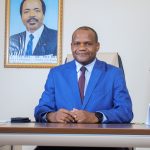 Prof. MAMOUDOU ABDOULMOUMINIHead
Governance
-
Scientific and Teaching Council of the Doctoral School
Chaired by the Director of the Doctoral School, it meets at least twice a year. It sets the School’s academic direction, adopts its action programme, proposes its budget, approves recruitment procedures and thesis defence reviews, rules on thesis topics and gives its opinion on admissions, registrations and the opening of programmes. Its members are the Director, the heads of the departments concerned, the heads of the DTUs, elected staff representatives and the Administrative and Scientific Secretary (Decision No. 036-2025, Arts. 7 and 8).
-
DTU Steering Committee
Chaired by the DTU Coordinator, it meets at least twice a year. It gives its opinion on admissions and on dissertation, thesis and HDR defences, reviews the DTU’s research programmes, evaluates the DTU and adopts its teaching regulations. Its members are the laboratory heads, the research team leaders, the programme leaders for doctorates and research Master’s degrees and an elected doctoral candidate representative (Decision No. 036-2025, Arts. 14 and 15).
-
University Scientific Committee
Chaired by the Rector, it oversees the activities of the doctoral schools. It sets the general policy for doctoral training and research, rules on action plans and activity reports, proposes to the Rector the list of shortlisted Master’s, doctoral and HDR candidates and reviews requests for defences. Its members include the Vice-Rectors, the Registrar, the heads of schools and faculties, the Directors of the doctoral schools and the DTU Coordinators; it holds one or two sessions per semester (Decision No. 036-2025, Arts. 44 to 47).
Doctoral admission
-
Read the call for applications
The Rector publishes a call for applications for admission to the second year of the Master’s degree. It sets out, for each DTU, the specialisations on offer and the number of places.
-
Pay the pre-registration fee
The application processing fee (20,000 FCFA for the 2025 call) is paid exclusively on the online pre-registration platform: un-registration.univ-ndere.cm.
-
Prepare your application
A stamped application addressed to the Rector, the registration form collected from the chosen school or faculty, two 4×4 photos, a certified copy of the baccalauréat, GCE Advanced Level or equivalent, certified copies of all transcripts and certificates of completion, and the receipt for the pre-registration fee.
-
Submit your application
Applications are submitted to the chosen school or faculty before the deadline set in the call (31 October 2025 at 3:30 p.m. for the call of 16 September 2025).
-
Review of applications
The Director of the Doctoral School collects the applications; the Scientific and Teaching Council gives its opinion on selection, and the Scientific Committee then proposes the list of shortlisted candidates to the Rector (Decision No. 036-2025, Arts. 6, 7 and 46).
Founding texts
-
Establishment
No. 2023/931
Creates the four doctoral schools of the University of Ngaoundere.
-
Restructuring
No. 2023/932
Restructures the Doctoral Training Units and groups the twelve DTUs within the four doctoral schools.
-
Organisation
No. 036-2025
Lays down the organisation and operation of the Doctoral School and of its DTUs, laboratories and research teams.
-
Appointment
No. 037-2025
Appoints the heads of the four doctoral schools and of the twelve Doctoral Training Units.
Frequently asked questions
How many doctoral schools are there?
Four, created in December 2023: Arts, Letters, Human and Educational Sciences; Legal, Political, Economic and Management Sciences; Science, Technology and Engineering; Life and Health Sciences. Together they comprise twelve Doctoral Training Units.
What is a Doctoral Training Unit (DTU)?
Within a doctoral school, it is the unit that offers the Master’s and doctoral programmes in a group of disciplines and brings together laboratories and research teams. It has at least two doctoral programmes, two laboratories and four associated research teams (Decision No. 036-2025, Art. 18).
How do I apply for the second year of a Master’s degree?
By responding to the call for applications published by the Rector: register online, then submit your application to the chosen school or faculty before the deadline.
Who approves thesis topics?
The Doctoral School approves thesis topics; its Scientific and Teaching Council rules on their validity (Decision No. 036-2025, Arts. 4 and 7).